
“Learning Jewish content and growing your reservoir of Jewish knowledge goes hand in hand with becoming a more thoughtful and sophisticated educator.”
This idea, shared by Program Director Jethro Berkman, undergirds the Jewish learning strand of the Early Career Educators Program. The curriculum emerged from a belief among the faculty that educators ought to be lifelong learners who thicken their Jewish knowledge as they are honing the purposes and values behind their own educational practices.
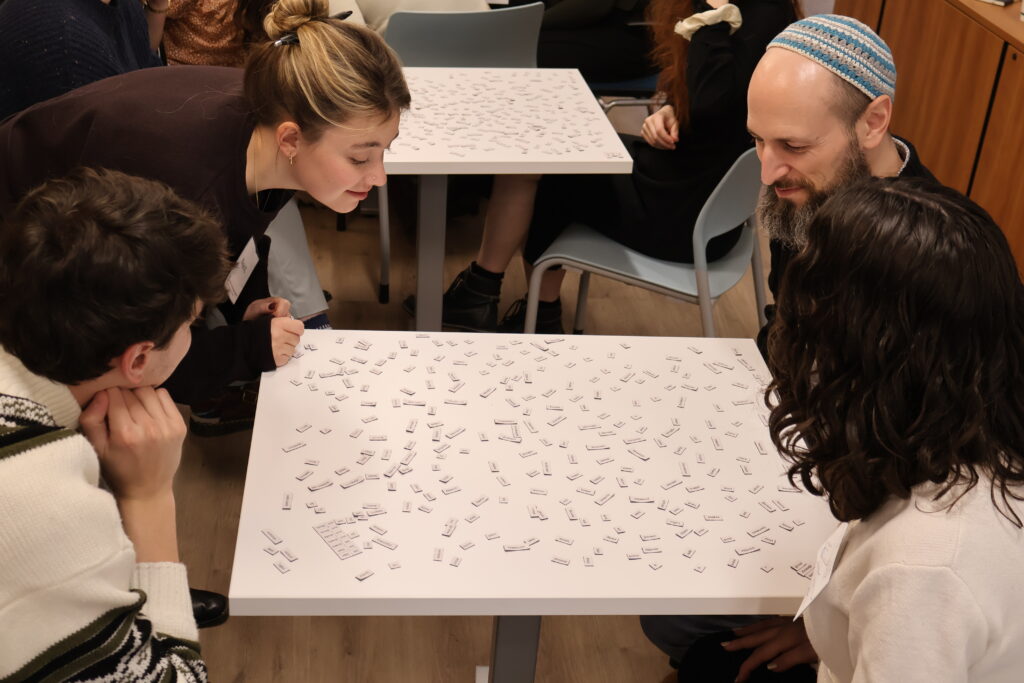
Organized into units of Jewish history, holidays, Hebrew language, Chumash (the five books the Torah), and rabbinic literature, the learning takes place between seminars through virtual sessions. Before each class, fellows are expected to review texts, videos, primary sources, and probing questions that elevate their Zoom discussions. While Hebrew instruction and text study will be segmented by level, history and holiday sessions combine fellows with varied experiences and exposures.
Bringing History to Life
The history strand dives into less familiar historical periods—medieval Spain, and the Jewish emancipation in Europe between the 18th and 20th centuries. Through study of the former, fellows will dig into the Jews’ fluctuating relationships with unstable polities; through study of the latter, fellows will build a familiarity with the conditions that led to mass immigration to the US, which in turn helps fellows comprehend the foundations for American Jewish life today. These examples, Jethro hopes, will foreground Jews who engaged the world with “creativity, resilience, and joy,” though this emphasis will not avoid or downplay the challenges and tragedies linked to these eras.
Given the limited instruction hours, Jethro aims, as any history teacher does, to relay specific sequences of events, orienting the learners towards a sense of place and time. Alongside this, he breathes life into notable figures like Shmuel HaNagid and Maimonides, offering fellows a window into how they were perceived, how they spent their days, with whom they interacted, and how their contributions have reverberated across generations. When discussing primary sources such as the Zohar, Jethro asks fellows to reflect on why authors might have written texts at specific times—the needs, aspirations and audiences they were addressing.
With this layered inquiry, fellows walk away with a factual grounding balanced by an ability to analyze historical contexts and contemporary comparisons. With the coming study of the Jewish expulsion from Spain, Jethro is especially looking forward to fellows discussing possible corollaries between post-Jewish Golden Age in Spain and present-day America.
From Pesach to Purim and Shabbat
For holiday learning, fellows’ unique upbringings, educational experiences, and practices provide a rich foundation upon which to build. The sessions help fellows deconstruct rituals, texts, and customs to develop analytical capabilities. How did a certain practice come into being? Who initiated it? For what reasons, and to promulgate which values? From this place, fellows will think deeply about the needs of their own communities, identifying rituals and narratives that promote the values they wish to impart upon their students.
They will also walk away, Tova explained, “seeing Jewish tradition as multi-layered,” and appreciating its “development and evolution.” For Tova, engaging with the richness of holidays’ evolution over time is paramount. She emphasizes that holidays have developed due to circumstantial historical realities, and their modern-day constructions are a reflection of a series of conscious choices by Jewish leaders and educators. What choices can fellows now make in their communities, and in their individual practices?
Looking Ahead
Jethro underscored that this is the first cohort of early career educators, and as a pilot program, everything is provisional. Based on observations and solicited feedback, faculty will adjust the content and structure both during and beyond the inaugural cohort.
This push for thicker Jewish learning is part of a wider effort at the Institute. We believe that a grounding in the richness of Jewish ideas, texts, history, and culture is a vital resource for professional growth and leadership. The outcome of this learning may not always be immediately applicable or outwardly visible, but it grounds and thickens leaders and their visions for the future. We look forward to sharing more as the fellows continue through the program!
This piece features words and ideas shared by Jethro Berkman and Tova Birnbaum. It was compiled by Andrew Barnwell.